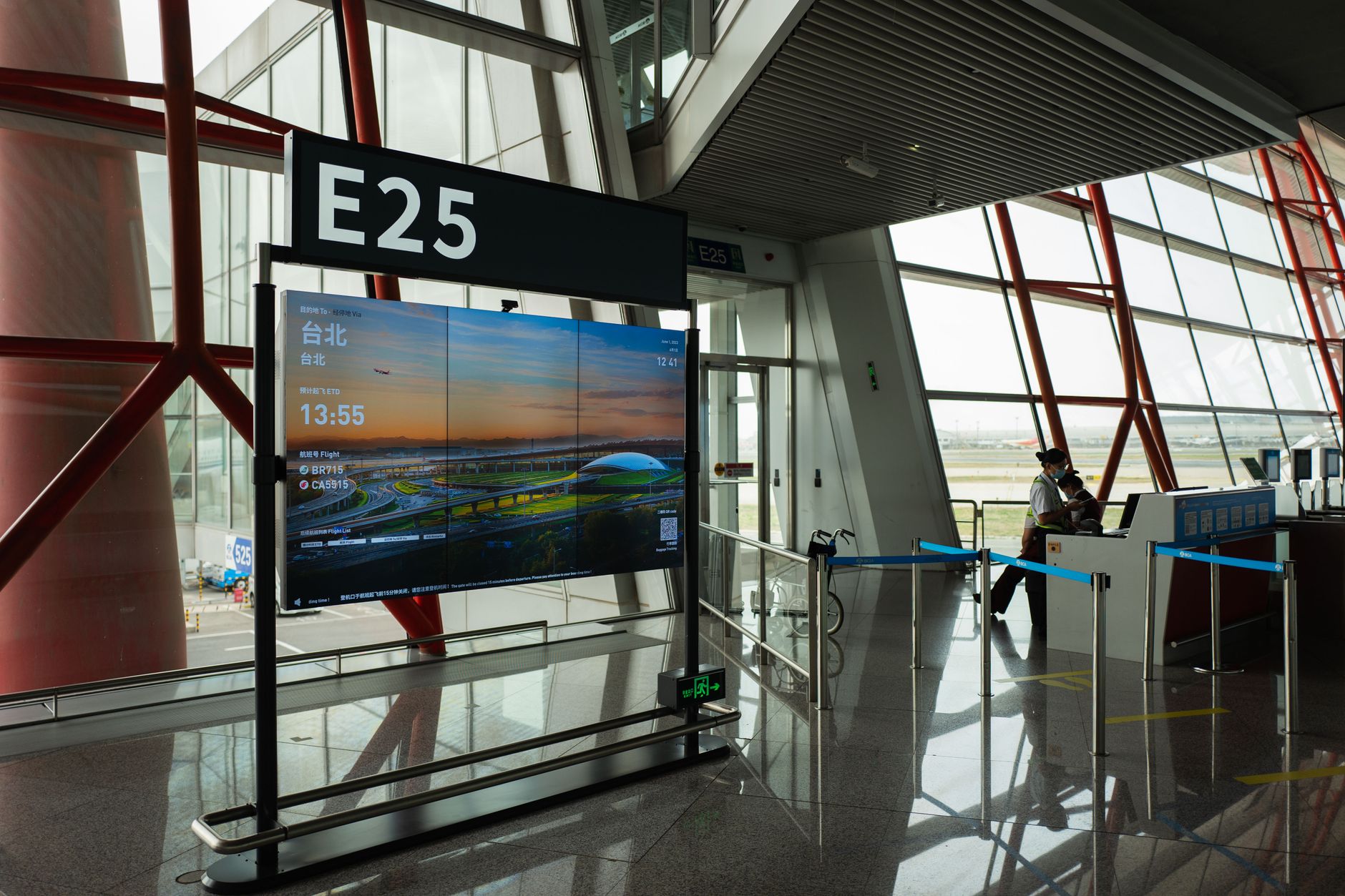
The headline this week was ‘We tested Samsung’s latest TVs, and these are our top recommendations for 2026’ – a round-up of the newest smart televisions, their specs, and which ones might suit a living room. For a facilities manager, the question is different: which of those same televisions can also run digital signage without breaking, and how much will it cost when the first one fails three months in?
The answer depends on three things: whether the television can display content full-screen without interference, whether it can receive an emergency alert and interrupt what is playing, and whether the android system underneath is capable of doing both reliably. The hardware cost is separate. A budget television might work fine; a mid-range one might not. The decision is not about the price tag on the box, but about what happens when the screen is supposed to matter most.
This is how to work out which televisions can do the job, what the real cost of using them is, and where the hidden failures appear after installation.
What an Android TV can actually do as a signage screen
An Android TV is not a dedicated signage player. It is a consumer device with a media stack that was never designed for 24/7 operation, no scheduled maintenance, and the need to interrupt whatever is playing when an emergency occurs. That said, it can run digital signage – but only if it meets two strict conditions:
-
The television must be able to grant the SYSTEM_ALERT_WINDOW permission, which is how an app takes over the screen. On a television, this is usually done once during setup, either by hand or via an adb command during provisioning. Without it, the app cannot start in the foreground, and any alert sent to the screen will fail silently.
-
The television must not be running a custom firmware or a locked-down version of Android that blocks background services. Some corporate or hospitality televisions ship with restrictions that prevent apps from staying alive, which means the digital signage player cannot keep a connection to the server or receive updates.
The result is a simple rule: not all Android TVs work as signage screens. A 2018 model with a slow processor might handle a static image, but freeze when an alert interrupts it. A 2023 model with a quad-core chip and 4GB of RAM might work fine, until the next Android update changes how the overlay permission is handled.
The trade-off is clear. A television that meets the requirements might cost less upfront than a dedicated player, but the long-term cost is not just the hardware. It is the time spent troubleshooting why a screen is not showing alerts, or why it has stopped updating its content.
The permission that breaks everything
The SYSTEM_ALERT_WINDOW permission is the single biggest obstacle to using an Android TV for digital signage. It is also the one most people get wrong.
On a phone, this permission lets an app display a small banner over other apps, like a chat notification. On a television, it is how the digital signage player takes over the entire screen. Without it, the player cannot start in the foreground, and any alert sent to the screen will be ignored.
The problem is that not all Android TVs grant this permission by default. Some manufacturers disable it entirely, either to prevent ads from appearing or to comply with a corporate policy. Others require the user to manually enable it through the settings menu, which is not an option in a public or industrial environment.
The workaround is to grant the permission during provisioning, using a single adb command:
adb shell pm grant com.your.package android.permission.SYSTEM_ALERT_WINDOW
This works on most televisions, but not all. Some devices, particularly older models or those running a heavily modified version of Android, refuse the command entirely. In those cases, the only solution is to replace the television with one that supports the permission.
The consequence is a hidden cost: the time spent testing each model before deployment, and the risk that a screen will stop working after an Android update. A dedicated player does not have this problem. It is designed to run digital signage without relying on consumer-grade permissions.
How fast does an alert actually reach a screen?
An alert reaching a screen in two to five seconds is the behaviour this system is designed for. That timing assumes:
- The television has the SYSTEM_ALERT_WINDOW permission granted.
- The player is already running in the foreground (which it is, thanks to the permission).
- The network connection is stable (or the content is cached locally).
- No other app is blocking the display (some media players or kiosk modes prevent overlays).
The failure modes are specific:
- A television that was never granted the overlay permission plays its loop perfectly and silently ignores every alert.
- A television running a custom firmware (common in hospitality or retail) may drop the permission after a reboot, requiring manual re-enabling.
- A television with a slow processor or weak WiFi connection may take longer than five seconds to load an alert, especially if the media is large.
The last point is worth emphasising. A high-resolution image or video sent as an alert will take longer to display than a simple text message. If the screen is supposed to show an evacuation route during a fire, the delay is not just a matter of seconds, it is a matter of whether people see it at all.
The real cost of using existing televisions
The upfront saving from using existing android televisions is obvious: no new hardware. The hidden costs appear later:
- Troubleshooting time: A screen that stops showing alerts because the overlay permission was revoked costs an IT visit. A dedicated player does not.
- Hardware replacement: A television that cannot handle the load (freezes, overheats, or fails after an update) must be replaced. A signage player built for 24/7 operation does not.
- Network impact: Televisions designed for living rooms are not optimised for digital signage traffic. A high-density deployment may require additional bandwidth or a dedicated VLAN.
- Software updates: Android updates can break the overlay permission, or change how the player behaves. A self-hosted digital signage system does not rely on third-party updates.
The decision is not just about the price of the television. It is about the total cost of ownership over five years, including the time spent fixing what goes wrong.
Which televisions actually work?
Not all Android TVs are equal. The models that work best for digital signage share these traits:
- Processor speed: A quad-core or better chip (e.g., Samsung Exynos 9 series, NVIDIA Tegra X1) handles interruptions and media playback without stuttering.
- RAM: At least 3GB (4GB is better). Low-RAM televisions struggle with multiple apps running in the background.
- Android version: Android 10 or later, with no deep customisation that blocks background services.
- Manufacturer support: Samsung and LG televisions with stock Android (not a branded skin) are the safest choices. Third-party brands may disable critical permissions.
A comparison of common models:
| Model | Processor | RAM | Overlay Permission | Notes |
|---|---|---|---|---|
| Samsung QN90C (2023) | Exynos 1280 | 8GB | Yes (with adb grant) | High-end, but overkill for basic signage. |
| LG 55A2 (2022) | Alpha 9025 | 4GB | Yes | Reliable, but older models may lag. |
| Xiaomi Mi TV Q2 (2021) | Amlogic S905Y2 | 3GB | No (blocked by firmware) | Avoid for digital signage. |
| Sony X85K (2020) | Exynos 9 series | 4GB | Yes | Good balance of price and performance. |
| Hisense 65A6K (2021) | Amlogic S905X3 | 3GB | Yes (but may drop after update) | Budget option, higher risk. |
The key takeaway is that android TVs can work for digital signage, but only if they meet the technical requirements. A television that looks cheap on paper may cost more in the long run when it fails to display alerts or requires constant IT intervention.
When a dedicated player is the better choice
A dedicated digital signage player, whether a Raspberry Pi, a Chromebox, or a purpose-built device, avoids the permission issues, update risks, and performance variability of an Android TV. The trade-off is a higher upfront cost, but the long-term savings come from:
-
No permission problems: The player is designed to run digital signage full-time, with no risk of the overlay being revoked.
-
Stable performance: A device built for 24/7 operation does not freeze, overheat, or fail after an update.
-
Predictable costs: No troubleshooting time, no unexpected hardware replacements, and no need to test every model before deployment.
The decision is not about whether a television can run digital signage, but whether the time and effort required to make it work are worth the short-term saving. In most cases, the answer is no.
What to do next
If existing android televisions are the only option, start by testing a small batch of models in a controlled environment. Use the adb command to grant the overlay permission, then simulate an alert to confirm it interrupts the display. If any television fails, assume it will fail at scale.
For a more reliable solution, consider a dedicated player or a managed digital signage device. The upfront cost is higher, but the long-term savings in time and troubleshooting make it the better choice for most estates.
To explore the options, visit the pricing page for a quote based on your site’s needs, or request a live demo to see the system in action with your own login at /request-demo.
For more details on how the android TV player works, including its limitations and requirements, see the native player guide. For a comparison of hardware options, including televisions, players, and managed devices, visit the hardware recommendations.